What is on your mind right now?
Different positions. Different requirements.

CSR Manager
Achieving Scope 3 reduction targets requires data transparency. However, the data needed for decision-making is not consistently available, and the procurement department lacks the mechanisms to make climate-focused decisions. How can implementation in procurement be achieved in a financially viable way? How do I convince the procurement department and senior management?

Sustainability Director
Tight margins, global crises, regulatory uncertainty: The transition away from greenhouse gases is now an economic gamble. What is an economically viable approach? What are our opportunities? What is the right level of ambition, and how can we implement this transition in a way that leverages synergies and keeps our business resilient and competitive?

Head of Scope 3
The key measures for reducing greenhouse gas emissions are already known. The challenge lies in implementation: Which initiatives should we start with? How do I get the procurement team and suppliers on board? How do I deal with insufficient data? How can we properly measure progress toward our goals?
They trust us















Our Services
Climate Transition in Food Retail Supply Chains
Identify Scope 3 hotspots in the product portfolio and develop transition strategies
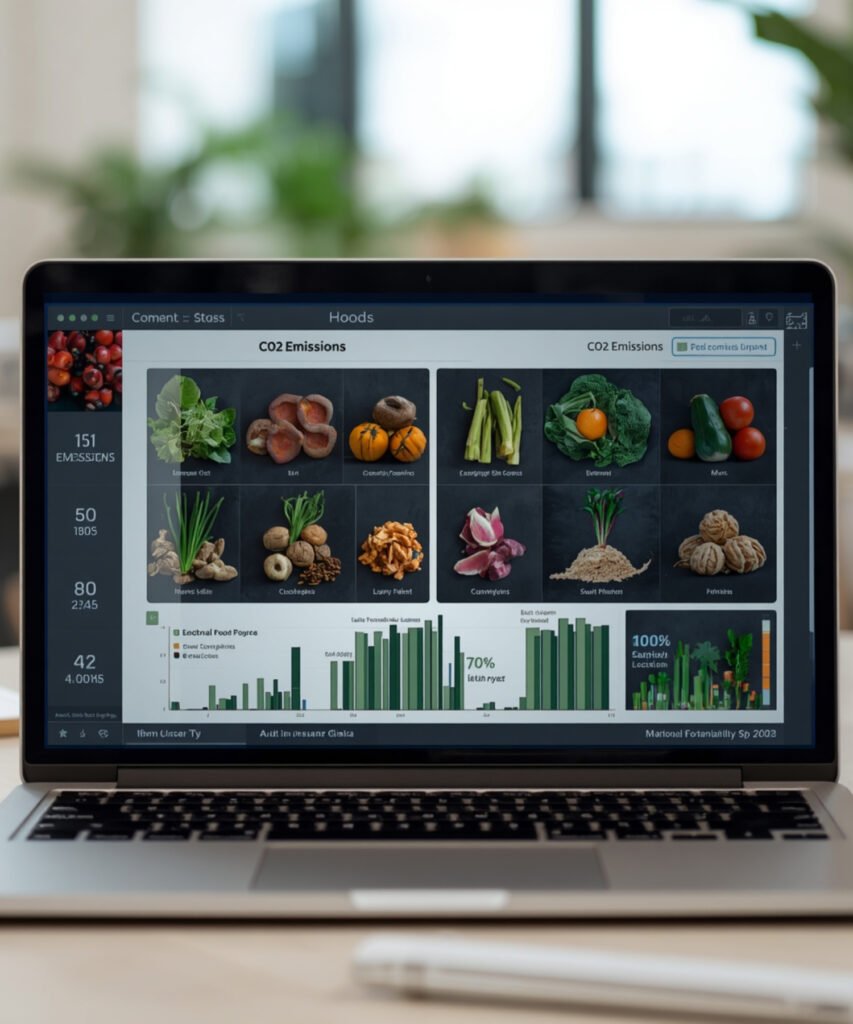
We identify which product categories, products, and suppliers generate the highest carbon emissions, including transparency into the processes responsible for these emissions within the supply chain and at the raw material level. Using our supply chain tools, tailored specifically for the food retail sector, we also efficiently identify which measures can realistically achieve specific reductions and what costs are to be expected. Based on this transparency, we develop economically viable transition plans in line with SBTi and CSRD to achieve a product portfolio aligned with the 1.5-degree target.
Implement GHG accounting and embed it strategically within the company
In our experience, before procuring a GHG accounting tool, it is advisable to develop the basic accounting processes and governance structures through a pilot project. We have proven and robust models for the food retail sector for calculating baselines, the impact of measures, and transformation plans for Scope 3. This enables us to establish a robust solution for GHG accounting that covers the collection of data sources, the integration of supplier data, the definition of internal decision-making structures, and the embedding of GHG management within procurement. This forms the essential foundation that enables you to take the next step—with our support, if you wish—to select the appropriate GHG accounting tool and turn GHG management into an efficiently managed standard process.
Integrate ESG requirements for suppliers into the procurement process
We develop systems that enable you to manage suppliers and products not only based on price and quality, but also on ESG performance and their contribution to achieving SBT targets. On the one hand, we define the data that should be requested from or made available by suppliers in order to properly compare and interpret suppliers’ ESG and GHG target achievement. On the other hand, it is essential to empower the procurement team to integrate ESG target achievement into purchasing decisions and negotiations, alongside price, quality, and on-time delivery. This requires establishing the right incentives, key performance indicators, and degree of autonomy for buyers so that they can effectively drive the company’s ESG goal achievement through their day-to-day operational decisions.
Effectively Implementing Supplier Engagement
We help to specifically engage and empower suppliers who are particularly relevant to achieving GHG targets. We implement supplier engagement as a comprehensive, economically viable strategy. For example, we provide support in: • Modifying purchasing terms to incentivize suppliers who implement effective reduction measures • Supporting suppliers in taking advantage of funding opportunities for climate measures • Supporting climate-optimized product innovations, including PCF assessment, in collaboration with selected suppliers • Piloting and scaling field projects in the context of regenerative agriculture and precision farming • Roll-out planning and support for the implementation of concrete reduction measures, including training for suppliers
Leveraging industry partnerships in a systematic way
Many Scope 3 challenges in the food retail sector are systemic. Individual retailers can make a significant difference—but when it comes to issues such as raw material resilience, data requirements, supplier empowerment, and the establishment of industry standards, a collaborative approach is often more effective and resource-efficient. Especially when ESG budgets are tight, we help food retail companies identify meaningful areas for collaboration, pool interests, set up industry formats in compliance with antitrust laws, and manage the collaboration.
Developing and implementing raw material resilience strategies
In the future, many raw materials and supply chains will face increasing threats from climate change, biodiversity loss, water stress, human rights risks, and regulatory requirements. We identify which raw materials are particularly affected and derive relevant procurement KPIs, such as the expected price increase due to climate change risks for each raw material. Based on this transparency for each raw material, we develop tailored action plans for procurement, supplier development, and product development to manage risks, and support the implementation of raw material resilience strategies. This allows you to effectively hedge against future price risks and leverage synergies between climate resilience and the transition of your business.
Product assortment design and sales strategies for achieving climate goals
Achieving climate goals requires a systematic shift in product offerings toward low-impact products. This can only be economically successful if consumers choose the more climate-friendly alternative at the point of sale. We assess how product assortment decisions, placement, communication, and digital recommendation systems influence purchasing behavior and environmental impact, and work with you to develop a sales and marketing strategy for low-impact products that contributes equally to both revenue and sustainability goals.
Define sustainability attributes for digital product data
We help you organize sustainability information in a way that makes it usable in digital channels, product data structures, and potentially agent-based purchasing decisions in the future. After all, anyone who wants to make purchasing decisions based on sustainability criteria tomorrow needs reliable product data.
Identify Scope 3 hotspots in the product portfolio and develop transition strategies
We identify which product categories, products, and suppliers generate the highest carbon emissions, including transparency into the processes responsible for these emissions within the supply chain and at the raw material level. Using our supply chain tools, tailored specifically for the food retail sector, we also efficiently identify which measures can realistically achieve specific reductions and what costs are to be expected. Based on this transparency, we develop economically viable transition plans in line with SBTi and CSRD to achieve a product portfolio aligned with the 1.5-degree target.
Implement GHG accounting and embed it strategically within the company
In our experience, before procuring a GHG accounting tool, it is advisable to develop the basic accounting processes and governance structures through a pilot project. We have proven and robust models for the food retail sector for calculating baselines, the impact of measures, and transformation plans for Scope 3. This enables us to establish a robust solution for GHG accounting that covers the collection of data sources, the integration of supplier data, the definition of internal decision-making structures, and the embedding of GHG management within procurement. This forms the essential foundation that enables you to take the next step—with our support, if you wish—to select the appropriate GHG accounting tool and turn GHG management into an efficiently managed standard process.
Integrate ESG requirements for suppliers into the procurement process
We develop systems that enable you to manage suppliers and products not only based on price and quality, but also on ESG performance and their contribution to achieving SBT targets. On the one hand, we define the data that should be requested from or made available by suppliers in order to properly compare and interpret suppliers’ ESG and GHG target achievement. On the other hand, it is essential to empower the procurement team to integrate ESG target achievement into purchasing decisions and negotiations, alongside price, quality, and on-time delivery. This requires establishing the right incentives, key performance indicators, and degree of autonomy for buyers so that they can effectively drive the company’s ESG goal achievement through their day-to-day operational decisions.
Effectively Implementing Supplier Engagement
We help to specifically engage and empower suppliers who are particularly relevant to achieving GHG targets. We implement supplier engagement as a comprehensive, economically viable strategy. For example, we provide support in: • Modifying purchasing terms to incentivize suppliers who implement effective reduction measures • Supporting suppliers in taking advantage of funding opportunities for climate measures • Supporting climate-optimized product innovations, including PCF assessment, in collaboration with selected suppliers • Piloting and scaling field projects in the context of regenerative agriculture and precision farming • Roll-out planning and support for the implementation of concrete reduction measures, including training for suppliers
Leveraging industry partnerships in a systematic way
Many Scope 3 challenges in the food retail sector are systemic. Individual retailers can make a significant difference—but when it comes to issues such as raw material resilience, data requirements, supplier empowerment, and the establishment of industry standards, a collaborative approach is often more effective and resource-efficient. Especially when ESG budgets are tight, we help food retail companies identify meaningful areas for collaboration, pool interests, set up industry formats in compliance with antitrust laws, and manage the collaboration.
Developing and implementing raw material resilience strategies
In the future, many raw materials and supply chains will face increasing threats from climate change, biodiversity loss, water stress, human rights risks, and regulatory requirements. We identify which raw materials are particularly affected and derive relevant procurement KPIs, such as the expected price increase due to climate change risks for each raw material. Based on this transparency for each raw material, we develop tailored action plans for procurement, supplier development, and product development to manage risks, and support the implementation of raw material resilience strategies. This allows you to effectively hedge against future price risks and leverage synergies between climate resilience and the transition of your business.
Product assortment design and sales strategies for achieving climate goals
Achieving climate goals requires a systematic shift in product offerings toward low-impact products. This can only be economically successful if consumers choose the more climate-friendly alternative at the point of sale. We assess how product assortment decisions, placement, communication, and digital recommendation systems influence purchasing behavior and environmental impact, and work with you to develop a sales and marketing strategy for low-impact products that contributes equally to both revenue and sustainability goals.
Define sustainability attributes for digital product data
We help you organize sustainability information in a way that makes it usable in digital channels, product data structures, and potentially agent-based purchasing decisions in the future. After all, anyone who wants to make purchasing decisions based on sustainability criteria tomorrow needs reliable product data.
Selection of case studies
Our projects in this area



Sustainable
business practices
We bring together things that many people think don’t go together—but that actually belong together. Because only those who operate sustainably can remain competitive in the long run.
25+ years of
experience
More than two decades of Systain prove that, for us, sustainability is not just a trend, but has always been our motivation and conviction for shaping the future.
Consulting that leads to action
The world needs sound decisions and meaningful change. That is why we help companies successfully implement sustainable strategies.